
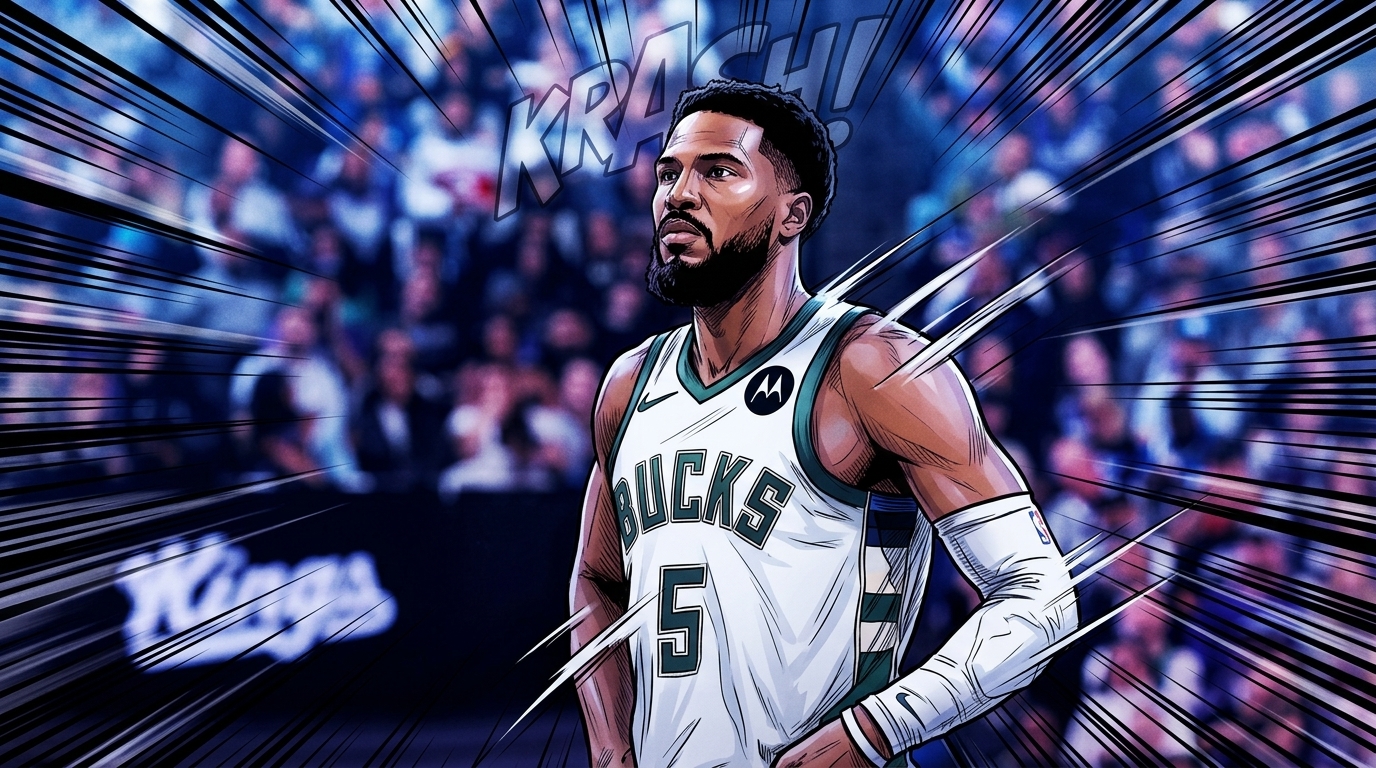
Malik Beasley allegedly grabbed his 4th rebound with one second left in a game against the Clippers so his co-conspirators could cash a prop bet. One second. The clock was basically expired and the man was still working the boards — not for the Bucks, but for the betting slip.
That detail is in the federal indictment. Beasley was charged June 29, 2026 with conspiracy to commit wire fraud, bribery in sporting contests, and money laundering. He pleaded not guilty July 1 and is out on $100K bond. His attorney says he looks forward to defending all charges. Fine. That’s how it works.
But the indictment itself is specific in ways that are hard to read and not feel sick. Four documented Bucks games during the 2023-24 season. Beasley allegedly tanking his own rebound totals, underperforming on points, hitting prop bet thresholds with the precision of a guy who knew exactly what number he needed. Co-defendant Ed Davis — former NBA player, now allegedly the scheme’s architect — had extended Beasley loans after Beasley burned through tens of millions in career earnings on gambling. The bribe was debt relief. Davis would erase what Beasley owed him in exchange for the stats. The betting ring turned $75,000 in wagers into at least $121,000 in winnings.
This is not an isolated case. This is a pattern, and the NBA gambling story has been building toward this for years. Jontay Porter got a lifetime ban in April 2024 after an associate placed an $80,000 parlay targeting a $1.1 million payout — all tied to Porter sharing his own injury information and then playing three minutes before leaving the game. The NBA responded with the “Jontay Porter Rule,” banning prop bets on low-salary players. Closed that window. Then in October 2025, a 34-person FBI sweep across 11 states landed Terry Rozier and Chauncey Billups, with four named Mafia families — Lucchese, Bonanno, Gambino, Genovese — in the same indictment. Now Beasley. Three cases in two years, each bigger than the last.
The league’s response to the latest one: “The integrity of our game remains our top priority.” That’s the actual statement from NBA spokesman Mike Bass. Integrity. From a league that signed FanDuel and DraftKings as official sportsbook partners in November 2021 and has since built a gambling-linked sponsorship empire that drives team revenue north of $1.4 billion per season. Seventeen authorized gaming operators. Betting odds integrated into broadcasts. FanDuel branding on arena boards.
This is where it gets uncomfortable to look at clearly. The NBA didn’t stumble into this. Adam Silver wrote a 2014 New York Times op-ed calling for sports betting to “come into the sunlight where it can be appropriately monitored and regulated.” He pushed for legalization. He got it. The Supreme Court struck down PASPA in 2018 and Silver moved fast, signing an MGM deal within months and bringing FanDuel and DraftKings aboard a few years later. The league became gambling’s most enthusiastic major-sport partner.
And then they built a culture where players were surrounded by betting content, betting partners, betting language, at every arena, on every broadcast, in every app that showed them a FanDuel ad during their own highlight package. You built the environment, you handed out the access, and you’re shocked some of them tried to work the system.
The internet’s take was “Brought to you by FanDuel.” That’s mean. It’s also not entirely wrong.
Ed Davis allegedly texted Beasley: “Only way you can beat Vegas is sports betting…We can make some good money.” Two men who spent years in the NBA, surrounded by legal sportsbooks at every turn, and that’s the logic they landed on. You can’t fully divorce that from the world the league constructed around them.
Beasley hasn’t been convicted of anything. In at least one of the four documented games the scheme apparently failed: he pulled down 6 rebounds against the Nets when the target was under. Courts will work this out.
But the pattern is real. Adam Silver brought gambling into the sunlight. Here we are.

